
Melasma relapse and uneven results: assess triggers
A visible patch can fade and still return. This lesson examines relapse, sun exposure, visible light, hormones and the limits of attributing results to a single serum.

Name the uncertainty before the treatment
Brown facial patches may result from melasma, post-inflammatory pigmentation or other causes. Distribution, onset, preceding inflammation, pregnancy or hormonal context and medical history help professionals differentiate them. Consumer quizzes and skin tone apps cannot reliably diagnose melasma or rule out changing lesions.
Melasma relapse and uneven results: assess triggers — a published visual reference for the topic, not SESH product-test data.
Open full-size image ↗Why colour can improve then rebound
Melasma is often chronic and prone to recurrence. Ultraviolet radiation and, for some people, visible light contribute to pigmentation; hormonal factors may also matter. Even when a targeted product appears effective, inconsistent sun protection and changing exposures can limit durability. Recurrence is not automatic proof a product was fake.
Choose measurement that matches the claim
Compare the same marked areas under similar lighting, with the same camera distance and no beauty filter. Separate overall skin glow from contrast of melasma patches. Published trials may use validated scores and colorimetry; before-and-after shots with different makeup or seasonal exposure are weak evidence.
Balanced limits
Photoprotection is foundational, including seeking appropriate tinted broad-spectrum options when visible-light-associated melasma is relevant. Prescription treatment choices depend on a clinician and individual circumstances. Rapid strong peels or multiple brighteners without tolerance monitoring can cause irritation and more marks.
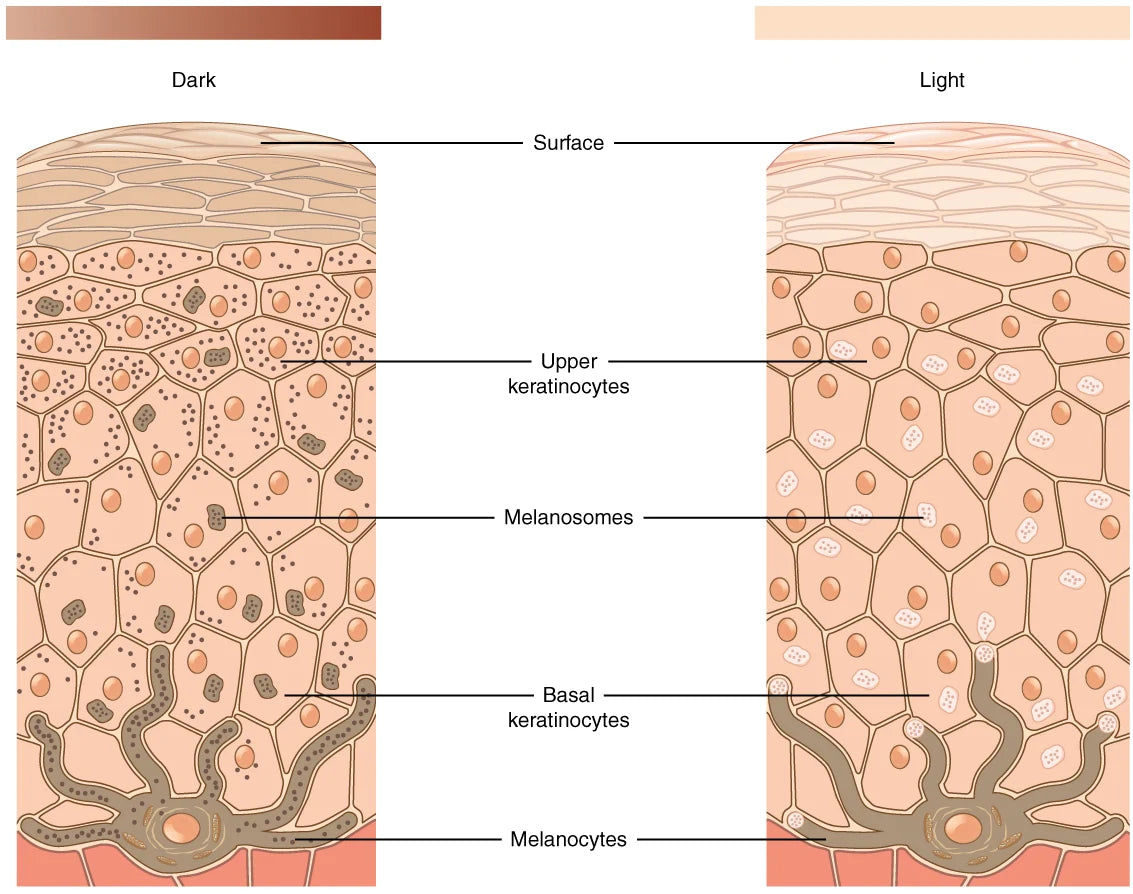
Melanocytes produce pigment and transfer it to surrounding cells. The diagram explains a mechanism; colour alone does not diagnose a dark spot.
Open full-size image ↗Reason through this case
Someone used a brightening serum for six weeks and has fewer visible marks in winter photographs. In summer, marks return despite continued use. What are three plausible explanations and one claim you must not make?
Reasoned, safe decision
Changes in UV or visible-light exposure, inconsistent application or photo conditions, and the natural course of melasma are plausible. It is not justified to say the serum 'stopped working' or that the original condition is confirmed without evaluation.
Scientific references
Further SESH learning
Educational only; not a diagnosis or prescription.

