
How perfumers build a fragrance
SESH Academy / Fragrance Academy · Beginner
Understand how accords are built and refined, and why no fixed top-heart-base percentage applies to all perfumes.

Linalool contains an OH alcohol group. One functional group is insufficient to predict every molecule’s odour or the performance of a mixture.
Open full-size image ↗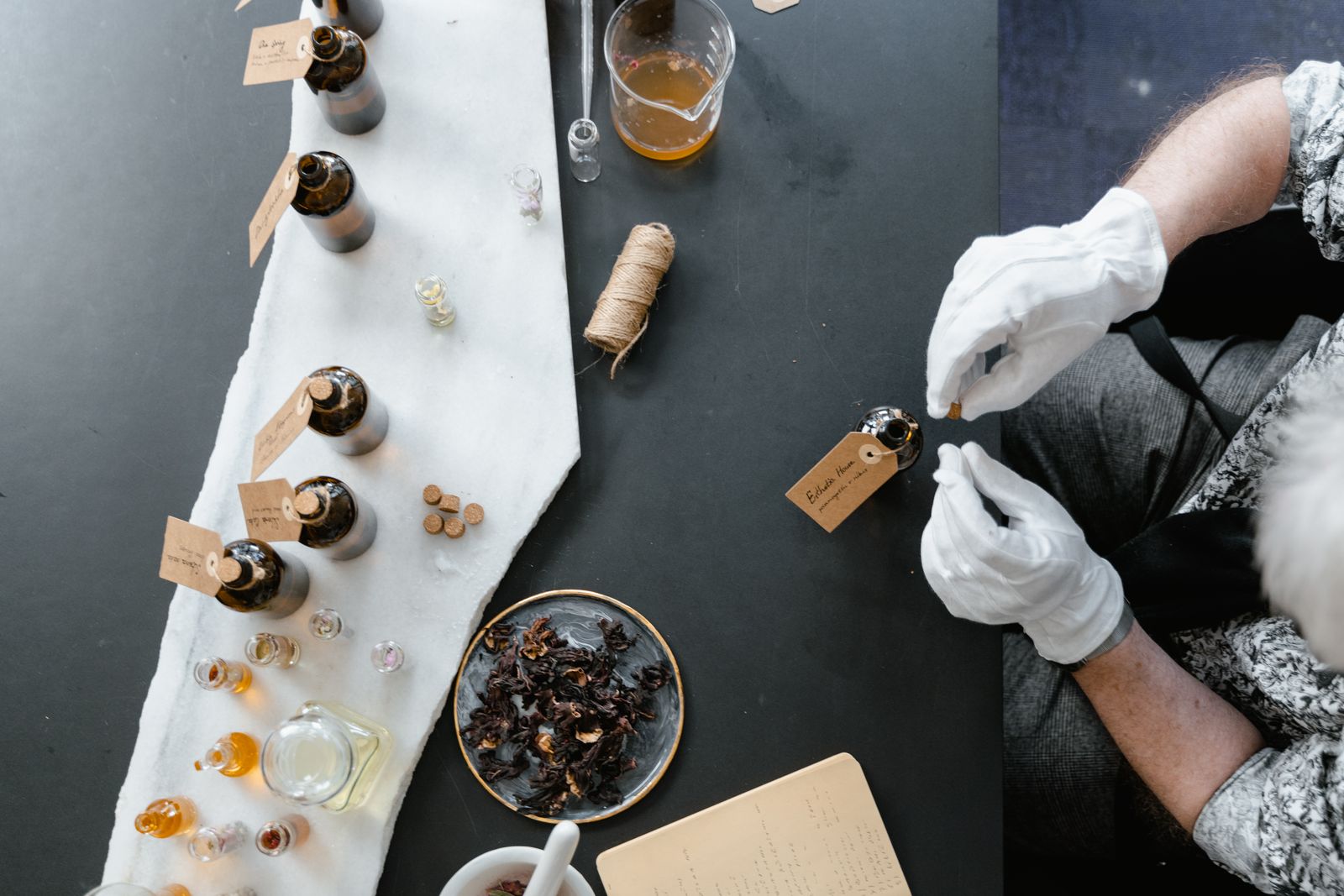
Start with a scent brief
A perfumer begins with a brief: 'a bright fruity opening that softens into a floral character', for instance. They select aroma materials and accords to create that evolution. Sparkling materials may give lift, floral materials provide character, and slower-fading materials support depth. This is the logic of construction, not one universal recipe.
The materials belong to one formula
Top, heart and base do not have mandatory percentages totaling 100%. One material can contribute across different stages, and note labels aren't necessarily separately weighed ingredients. A perfumer balances real materials in a formula, tests the outcome, adjusts amounts and tests again. Some successful compositions are simple; others are complex. More ingredients don't inherently mean better perfume.
Constructing a scent isn't random mixing
The perfumer checks how materials work together, how they evaporate, whether the formula is stable in its carrier, and applicable safety restrictions. Beginners shouldn't improvise concentrated oil mixtures on skin because aroma materials may have usage limits and sensitivities. At this level we'll understand construction through safe examples; quantitative formulation belongs in advanced study.

Compare vanillin with a vanilla pod: one is a specified chemical and the other a complex botanical material. A vanilla note is a broader sensory description.
Open full-size image ↗A practical construction example
Imagine a brief calling for bright bergamot, a jasmine heart and a soft sandalwood finish. This is a description of desired perception, not a pouring order. Changing even a supporting material may make jasmine more noticeable or soften the opening. Each version must be evaluated rather than assumed to work.
Try it yourself
Write a fragrance brief on paper: citrus opening, floral heart, warm base. Choose illustrative note ideas without mixing concentrated raw materials at home.
• Define the opening impression.
• Choose a central character.
• Suggest a supportive dry-down without inventing mandatory percentages.
Check your reasoning: For example, bergamot → white florals → sandalwood describes one possible scent narrative, not a ready-to-use formula. The real materials are balanced together.

