
Lesson 2 of 4 in this stage
Oily, dry, combination or normal?
Distinguish skin types using clear observations, and separate type from temporary dehydration and sensitivity.

Locate the sebaceous gland and its connection to the follicle. Oil production differs from outer-skin water; shine and temporary dehydration can coexist.
Open full-size image ↗Start with the main distinction
Skin type describes a usual pattern, especially oil distribution and dryness during ordinary days. It is not skin colour, a medical diagnosis or a lifelong label. A photo or the feeling immediately after a harsh cleanser is not enough. Compare the forehead, nose and chin with the cheeks, and ask whether this is typical or new. The T-zone means the forehead, nose and chin.
The four patterns, clearly
| Type | Usual signs | Starting point for care |
|---|---|---|
| Oily | Shine and an oily feel across much of the face; pores may look more visible. Acne is not required. | Gentle cleansing and a comfortable moisturizer, without aggressive stripping. |
| Dry | Recurring dryness or roughness, sometimes flaking, with less oily shine. | Non-harsh cleansing and a richer moisturizer if comfortable. |
| Combination | An oilier T-zone with cheeks that are normal or dry. | One basic routine, adjusting moisturizer amount or texture by area. |
| Normal / balanced | No persistent troublesome oiliness or dryness. | Maintain simple cleansing, moisturizing and protection without unnecessary treatments. |
Sensitivity and dehydration can overlap with any type
Oily skin can sting after a product, and combination skin can become temporarily tight. Sensitive describes a tendency to react, not oil distribution, and it does not automatically mean a confirmed contact allergy. A dry skin type is also different from temporary low hydration. Shine does not prove adequate hydration; tightness after a new product does not prove a change of type.
Observe without stressing your skin
Over several ordinary days, record where shine or tightness occurs, when it happens and which products you used. Sweat or a shiny sunscreen finish alone can mislead you. You do not need to leave uncomfortable skin without moisturizer for hours or wash repeatedly as a test. If the pattern is unclear, use a simple comfortable routine and adjust from your observations; a perfect label is not a prerequisite for care.
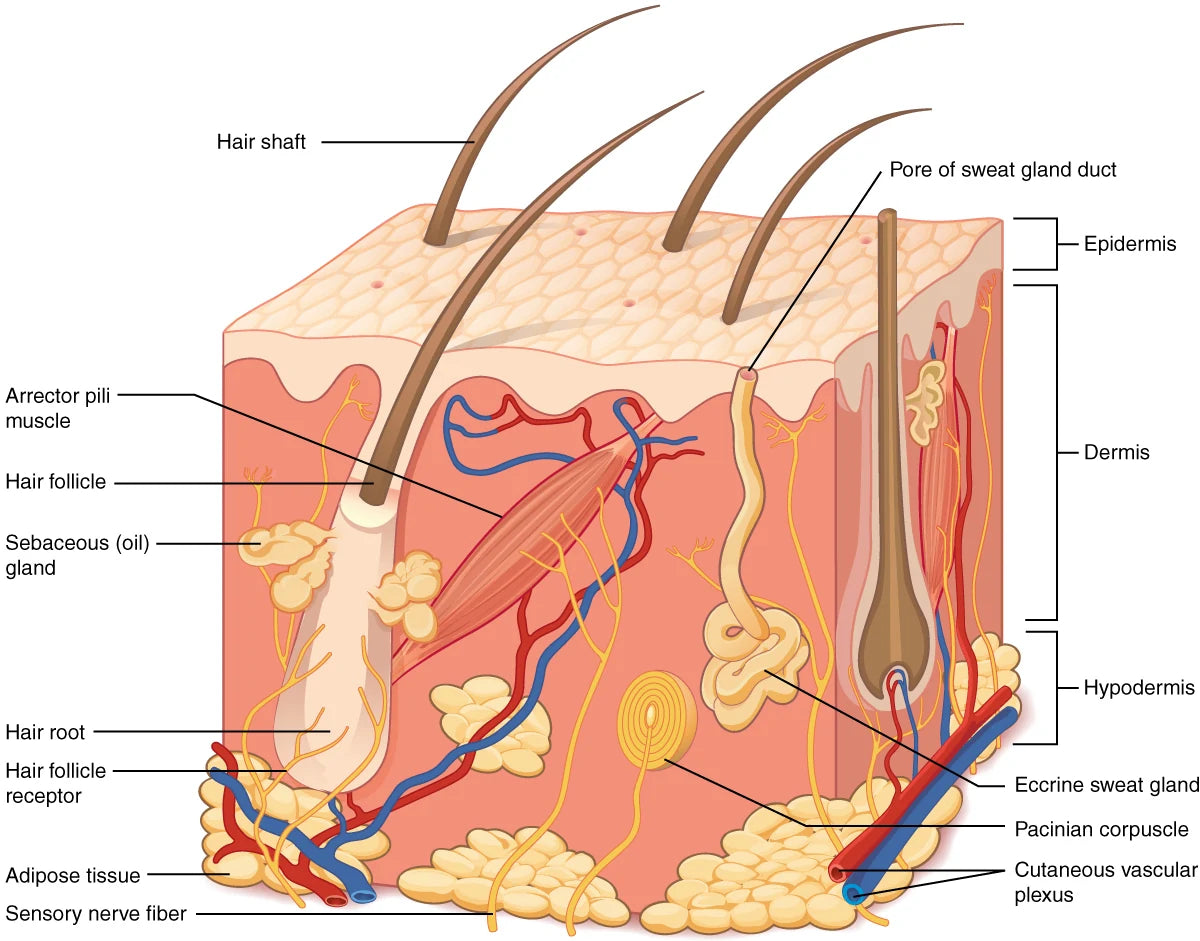
Skin anatomy: the epidermis sits above the dermis, with follicles and glands at different depths. Location explains a skincare target; it does not prove that a product reaches every layer.
Observe a pattern instead of guessing
Assess your usual skin over several ordinary days, not immediately after a scrub, mask or aggressive cleanser. Observe your forehead, nose, chin and cheeks separately. Where does shine regularly appear? Are the cheeks consistently rough? Did the pattern change with weather or a new routine? Record what repeats, rather than assigning a permanent label based on one unusual day.
Three separate questions
- Skin type: your usual oil and dryness pattern.
- Temporary dehydration: a condition that can coexist with shine.
- Irritation or allergy: symptoms and reactions that need their cause assessed, not an automatic fifth skin type.
Acne does not by itself prove an oily skin type, and redness does not identify a specific allergen.
Make a real decision
If your forehead becomes shiny while your cheeks feel tight after washing, neither an increasingly harsh cleanser nor treating your entire face as very dry is a logical first move. Start with gentle cleansing, adjust moisturizer texture or amount by area and observe comfort. Different areas can need different amounts of the same product; two complete routines are rarely the first requirement.
Your turn
Use what you learned
Classify: 1) oily shine across most of the face; 2) an oily T-zone and dry cheeks; 3) usual roughness and dryness across most of the face. Name one missing detail before choosing a product.
See the answer and why
1 oily; 2 combination; 3 dry. Useful extra information includes current stinging, the cleanser used or a known allergy. A type is a starting point, not a ready-made product prescription.
Check your understanding
Answer four questions, then review the reason for each answer. You can retry.


