
Skin Academy · Beginner
UVA and UVB: what sunlight does to skin
Learn UV types and why protection is not just for beach days.

Locate ultraviolet and visible light within the spectrum. This is not a sunscreen protection test; protection must be assessed from product data and testing.
Open full-size image ↗Science made simple
UV is invisible. UVB strongly contributes to sunburn; UVA contributes to pigment effects and cumulative photoageing. Both can damage skin and increase skin cancer risk. Feeling hot is not a UV meter.
What changes the result
SPF is measured under standardized conditions and primarily reflects sunburn protection. 'Broad spectrum' indicates UVA coverage under an applicable standard. SPF30 is not 30 hours, and no sunscreen blocks all UV.
Apply it to a real routine
Choose broad-spectrum SPF30+ for outdoor exposure, paired with shade, clothing and a hat. Clouds or being near windows do not always mean no UVA; exposure varies by place, time and glass. Protection comes before brightening claims.
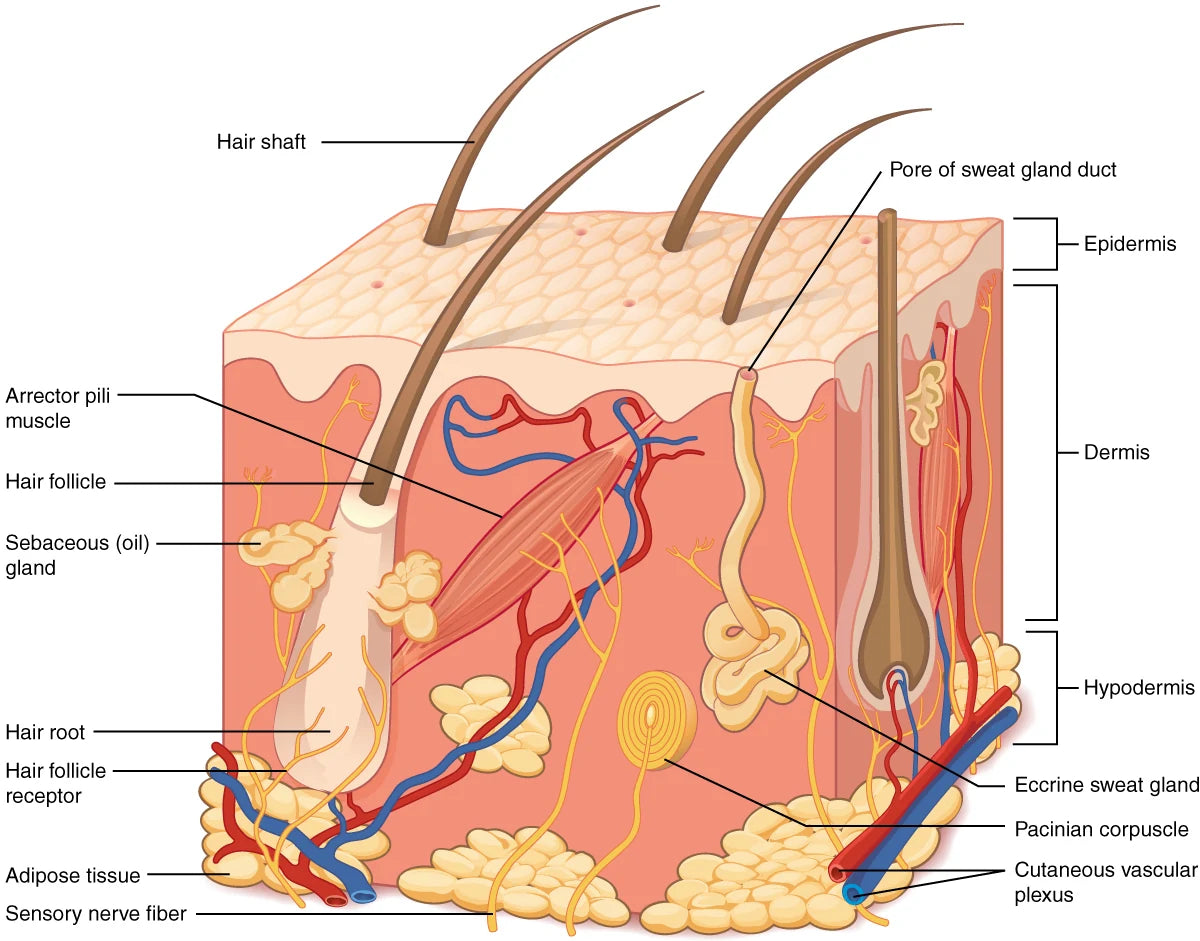
Skin anatomy: the epidermis sits above the dermis, with follicles and glands at different depths. Location explains a skincare target; it does not prove that a product reaches every layer.
UVA and UVB are not identical
UVB strongly contributes to the sunburn response. UVA penetrates relatively deeper and contributes to cumulative ageing signs and pigmentation changes. Both matter in photodamage, which is why broad-spectrum coverage is valuable in addition to the SPF number.
A daily example
A cool commute is not proof of absent UV. If you spend extended periods outdoors, account for time of day, shade and clothing alongside sunscreen. Protection is not only about avoiding today's burn; it is a long-term habit to reduce cumulative exposure.
Scientific reading
FDA ↗Finished-product examples from SESH
Study the product role and ingredients; these links do not imply a formula-specific clinical claim.
Simply one Sunscreen Fluid SPF50+ ↗
