
Sweet, amber and spicy fragrances
SESH Academy / Fragrance Academy · Beginner
Distinguish edible-like sweetness from warm amber accords and spicy effects.

Vanilla pods are a real botanical source. A vanilla note can be created with different materials and does not prove the presence of pods or extract.
Open full-size image ↗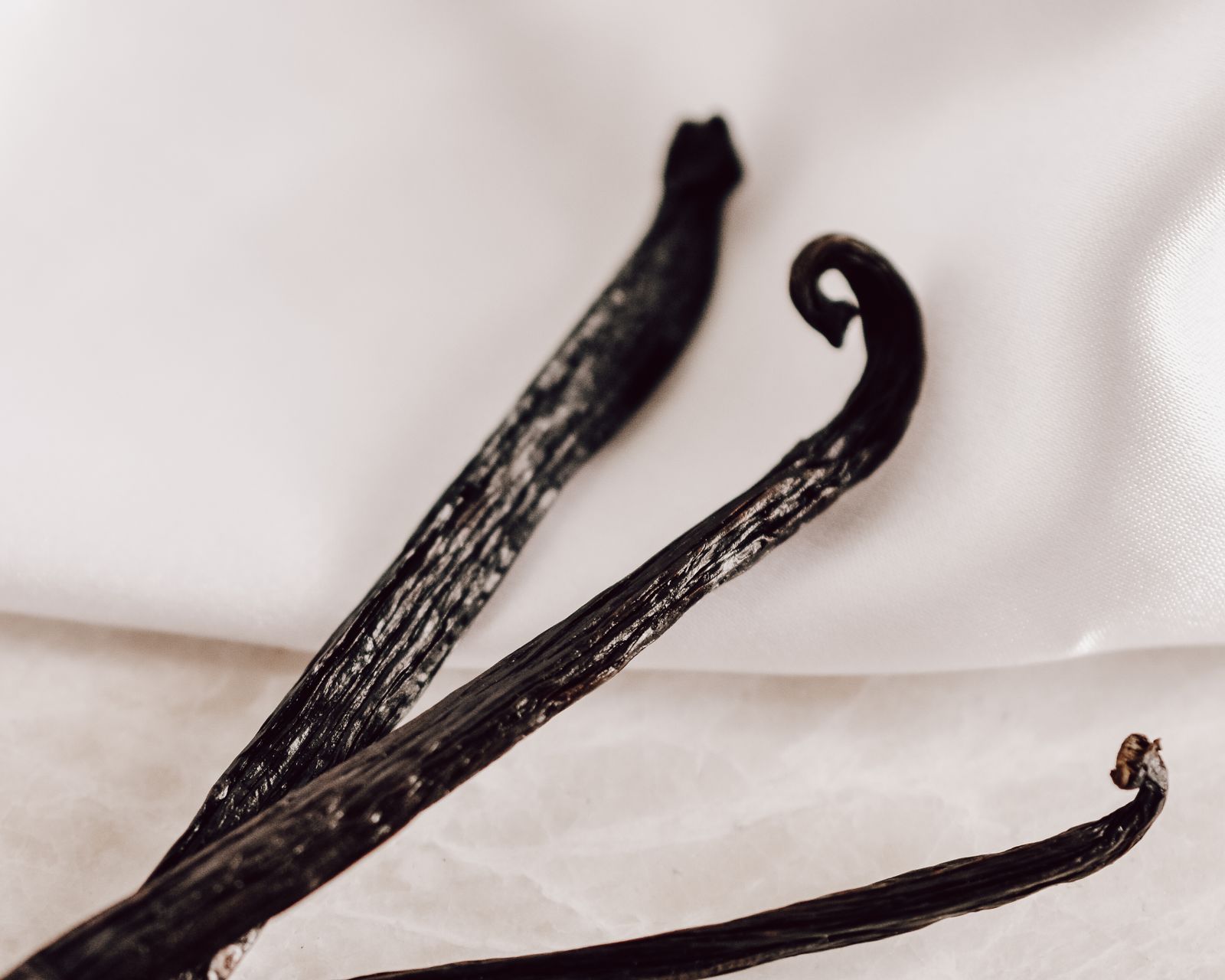
Gourmand: dessert-like, not edible
Vanilla, praline, caramel and whipped cream describe dessert-like impressions. A cupcake-scented perfume isn't edible and doesn't necessarily contain food ingredients. Gourmand effects may appear at the opening with candied fruit, but often contribute warmth and sweetness through the heart or base because some supporting materials persist.
Amber: warmth, not a gemstone
In perfumery, amber commonly describes a warm resinous or balsamic accord, sometimes with vanilla or incense facets. It doesn't mean fossil amber in the bottle. An ambery effect can support a base or influence the entire fragrance from the opening. Amber is a sensory family, not one single raw material; it is distinct from the historical term ambergris.
Spicy doesn't mean burning your skin
Pink pepper can feel sparkling in an opening, saffron-like cues may contribute dry warmth, and cinnamon-like effects can feel sweetly spicy. These are scent descriptions, not instructions to mix culinary spices into skincare. Spicy effects may support top, heart or base depending on the actual materials.

Compare vanillin with a vanilla pod: one is a specified chemical and the other a complex botanical material. A vanilla note is a broader sensory description.
Open full-size image ↗How sweet and spicy can coexist
Secrets of Cairo is a real example: its published profile combines saffron, oud and pink pepper alongside rose, praline, musk, vanilla and sandalwood. A more useful prediction than simply 'oriental' is warm, spicy, woody and sweet. That doesn't certify a particular natural source for any given note.
Try it yourself
Make three scent cards: caramel, warm incense and pink pepper. Sort into gourmand, amber and spicy, then combine two descriptors for an imagined blend.
• Do not taste or mix perfumes or concentrated oils.
• Identify dessert-like versus spicy impressions.
• Write a combined description, such as 'sweet spicy'.
Check your reasoning: Caramel suggests gourmand, warm resin/incense can support amber, and pink pepper is spicy. A composition may blend all three.

