Why you may not smell every listed note | SESH Academy
SESH · Intermediate Fragrance Academy
Distinguish a marketing note list, actual materials and discernible scent impressions.

Vanilla pods are a real botanical source. A vanilla note can be created with different materials and does not prove the presence of pods or extract.
Open full-size image ↗
A note list is a map, not a formula
A listed pyramid of strawberry, rose and musk usually describes the intended scent impression, not a full list of ingredients or their percentages. A strawberry effect can involve multiple aroma materials, while a rose note might come from natural extracts, synthetic components or a blend. The order of notes cannot tell you the exact formula.
Why a listed note can be hard to detect
At least four plausible explanations exist: the facet is subtle, another impression masks it, your sensitivity differs for that odor character, or your mental reference for the word is different. 'Musk', for example, can describe a modern clean skin-like accord rather than the historical animalic association. Failure to detect a note does not prove absence.
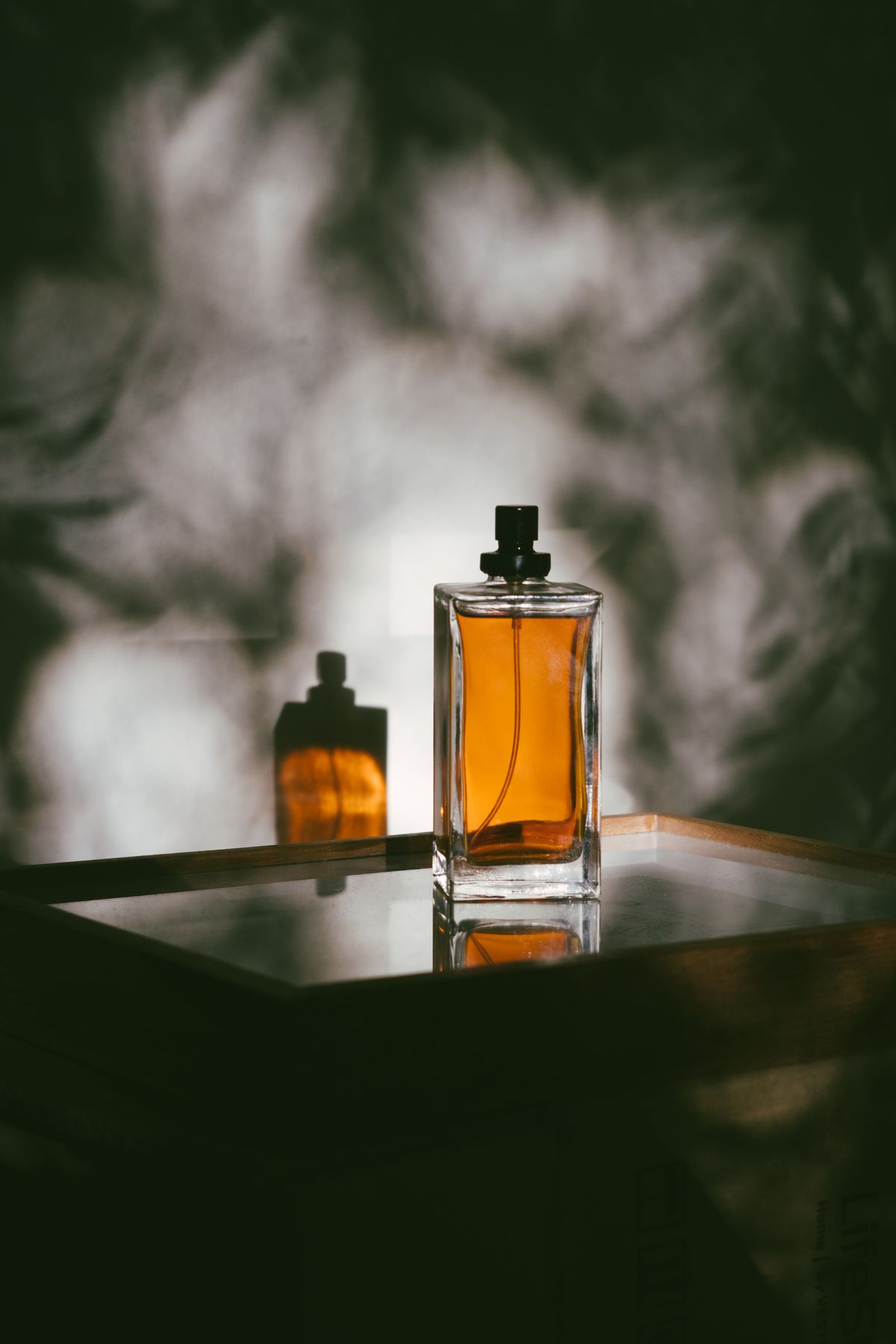
Some notes are constructed accords
An apple or cake note does not require literal apple juice or cake in the bottle. A perfumer constructs an illusion from appropriate odor materials. The 'smell story' of a fragrance, an INCI ingredient declaration and the confidential formulation are distinct documents serving different purposes.

Compare vanillin with a vanilla pod: one is a specified chemical and the other a complex botanical material. A vanilla note is a broader sensory description.
Open full-size image ↗Try a blind description
Smell first and write five descriptors without reading the product page. Then compare your independent description with the published notes: what aligns, what does not, and which subtle nuances remain uncertain? A mismatch does not demonstrate fraud or prove a material is absent; a marketing description and an individual's sensory perception are not identical.

Case: apple, rose and musk on the label
A product lists apple, rose and musk. Your blind test instead finds a faint fruity freshness and a dominant floral body, but no unmistakable apple. This need not be a contradiction. An apple impression may be a constructed accord that merges into the overall fruity-floral impression; a musk-like facet may add softness without standing alone. The advertised scent narrative, actual raw materials and your detectable impressions answer three different questions.
What the ingredient label can and cannot tell you
An INCI declaration may list parfum/fragrance and other substances required by the applicable labeling rules, but it is not necessarily a full breakdown of every aromatic constituent and percentage. It may help identify declared ingredients or allergens; it will not translate directly into a note pyramid. Images of roses or the phrase 'rose note' are not proof that rose oil was used.
Practical exercise
Ask a friend to describe a fragrance without seeing its notes, then reveal the pyramid and ask again. Compare how expectations change the vocabulary, without labelling one perception wrong.
Comparison guide
Three distinct types of information
- Note pyramid: scent narrative
- INCI: label ingredient nomenclature
- Formula: actual materials and proportions
Why a facet may be elusive
- Masked by a stronger facet
- Individual smell sensitivity
- A different mental reference
Practice with SESH fragrances
Optional references for practice, without unverified ingredient claims or rankings.