
SESH · FRAGRANCE ACADEMY · INTERMEDIATE
Account for temperature, airflow and humidity when comparing perceived performance.

Particles spread from higher to lower concentration. This is a qualitative model, not a perfume longevity timeline or a measured skin absorption rate.
Open full-size image ↗
Temperature changes the release conditions
Higher temperature can change evaporation and perceptual intensity, yet there is no single direction for every formulation. Some rich sweet scents may feel overwhelming in heat to particular wearers without becoming longer-lasting. 'Summer fragrance' and 'winter fragrance' are largely contextual style preferences, not chemical categories.
Humidity changes the context
Humidity interacts with skin condition and comfort and may affect your sensory experience along with other variables. Avoid promising a fixed projection increase from humid air. Record approximate temperature, humidity, fans or air-conditioning so that one observed change is not incorrectly attributed to a single factor.
Air movement changes detectability
Outdoor air disperses scent differently from a small enclosed space; in poorly ventilated rooms, even moderate fragrance can feel intrusive. Compare perfumes in similar environments. Do not increase sprays for an experiment in closed rooms or around people sensitive to fragrance.

Locate ultraviolet and visible light within the spectrum. This is not a sunscreen protection test; protection must be assessed from product data and testing.
Open full-size image ↗Observe rather than predict
Prefer 'on a hot day A initially seemed stronger than B' to 'heat makes all perfume stronger'. Document dose, substrate, activity and timing. A different result on another day is valuable evidence that more variables need controlling rather than a reason to discard the observations.
Example: indoor versus outdoor
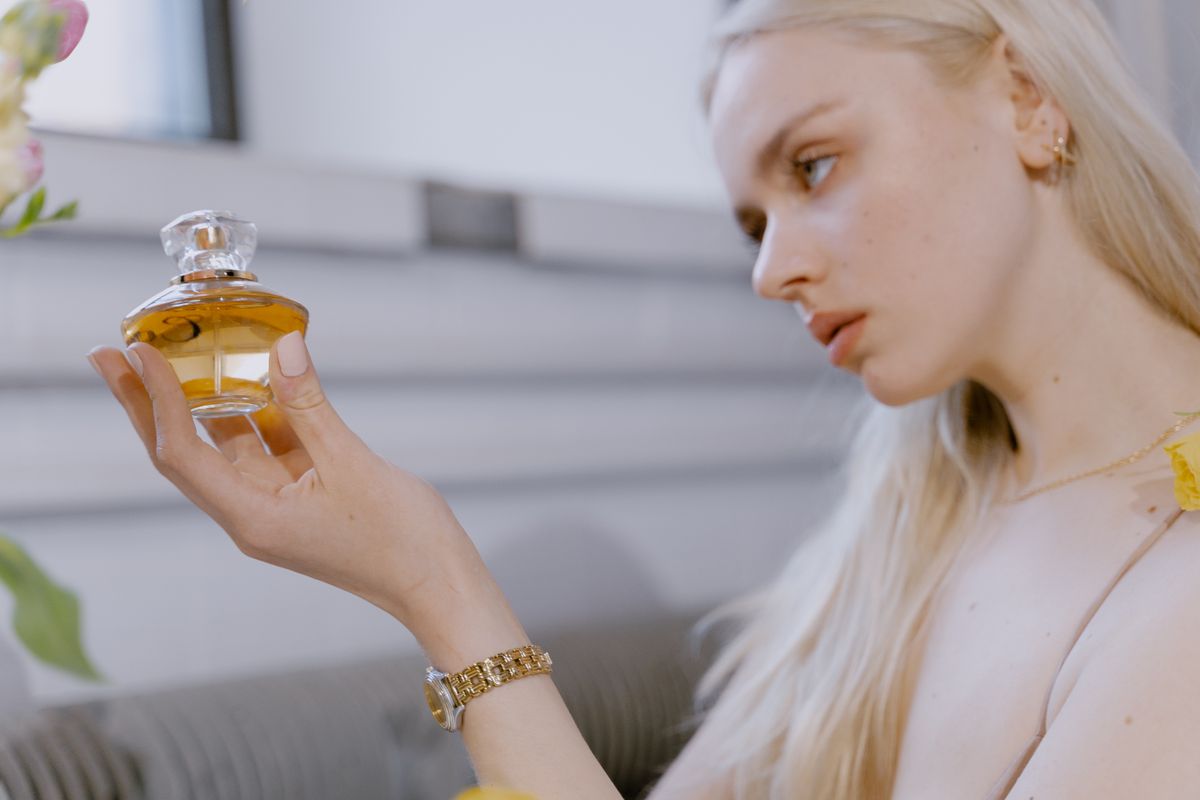
A person tries the same perfume in an air-conditioned vehicle and later during an outdoor walk. They perceive dense sweetness inside and a fainter, shorter impression outdoors. It is not sound to blame 'heat' alone because airflow, activity, dosing and observation differ. Repeat under more closely matched conditions.
Choose for situation, not rigid seasons
Before choosing, consider space, proximity to others and whether a dense sweet scent could bother them. Selecting for comfort and situation is more precise than declaring whole fragrance families forbidden in summer.
Practice challenge
Repeat the same fragrance test on two days, recording temperature, ventilation and spray count. Describe differences without creating climate-wide guarantees.
Key concept map
Environmental variables
- Temperature
- Humidity
- Air movement
- Room size
Responsible selection
- Start with modest dose
- Respect proximity
- Test in realistic setting
Try the analysis on SESH fragrances
These are optional references for comparison, not evidence of a specific ingredient or superiority claim.
Further reading
The Perfume Society: fragrance FAQs · IFRA fragrance standards

