SESH Academy

Full topic reading

From the basics to the details

Exfoliation, AHA and BHA: differences and use

What does exfoliation do?

Surface skin cells naturally renew and shed. Exfoliation helps remove some surface cells through friction, such as a scrub, or chemical ingredients such as certain acids. It is optional, and visible peeling or burning is not the goal. Painful or inflamed skin is not a good starting point for adding an exfoliant.

Find the stratum corneum at the top and cell renewal below. This is thick skin, such as a palm; its clear lucidum layer is absent from facial skin.

Find the stratum corneum at the top and cell renewal below. This is thick skin, such as a palm; its clear lucidum layer is absent from facial skin.

Image source · OpenStax College: J. Gordon Betts, Peter Desaix, Eddie JohnsonCC BY 3.0Compressed display copy; illustration content retained.
Open full-size image ↗

AHA and BHA with familiar names

GroupExamplesCommon role and limits
AHAGlycolic and lactic acidsUsed for surface texture and some uneven colour; can increase sun sensitivity and irritation.
BHA in skincareSalicylic acidUsed in some clogged-pore and acne products; not a treatment for every breakout.
Physical exfoliationScrubs or rubbing toolsUses friction; intensity, pressure and frequency can irritate.

A sensible starting approach

Check whether the product rinses off or stays on, where it is intended to be used and its stated frequency. Do not apply directions for a strong body exfoliant to the face. Review existing retinoids or other irritating treatments before adding an acid, and introduce it cautiously as tolerated. Percentage alone does not measure strength: acid type, pH and formulation matter. Avoid raw-acid mixtures or lemon and baking-soda recipes. FDA guidance emphasizes sun protection during AHA use and for a week afterward.

Chemical versus physical is not a strength contest

Certain AHAs and BHAs assist surface-cell shedding through mechanisms that depend on the acid, its concentration and the full formulation. Scrubs work through mechanical friction. The category name alone cannot predict irritation or performance: particle characteristics, rubbing pressure, acid concentration and frequency all matter.

Recognize when exfoliation is too much

Persistent stinging, redness, post-wash tightness and painful peeling are not proof of progress. Pause or reduce exfoliation and reassess the routine if irritation occurs. Do not start a new scrub, exfoliating acid and retinoid together. People with very reactive skin or an active dermatologic condition may need clinical guidance before exfoliating.
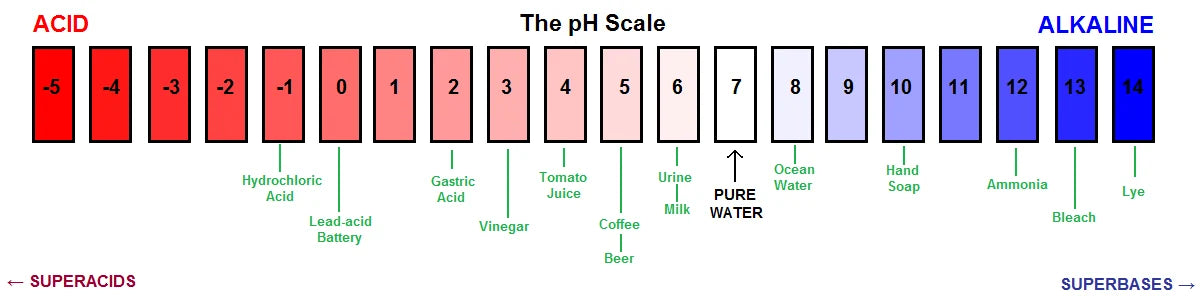
Compare the acidic, neutral and alkaline parts of the pH scale. A pH value alone does not determine exfoliation strength or skin compatibility.


Compare the acidic, neutral and alkaline parts of the pH scale. A pH value alone does not determine exfoliation strength or skin compatibility.

Image source · PiercetheorganistPublic domainCompressed display copy; illustration content retained.
Open full-size image ↗
Sources and further reading

Two exfoliants with the same percentage: same result?

Percentage is one part of the story

A 5% product is not automatically equivalent to every other 5% product. Ask which acid, whether the percentage refers to active material or a blend, what pH is disclosed, whether it rinses off and how often it is used. A cleanser used briefly as directed differs from a leave-on toner even if both mention the same acid.

Count repeated functions in the routine

An acid cleanser, exfoliating toner, scrub and retinoid can create overlapping irritation even when the names differ. Write down each step's role. A blackhead concern does not require several daily whole-face exfoliation methods. Choose an appropriate targeted step, follow its directions, and support moisturizing and protection before considering increases.

A change you can interpret

If irritation starts after adding a toner, do not replace cleanser, moisturizer and sunscreen on the same day without a reason. Pause the irritating addition and monitor, seeking assessment for severe or persistent symptoms. If calm skin is choosing between products, try one as directed. Do not compare strong acids on opposite sides of the face by which burns more.

Why two equal-percentage AHAs need not behave alike

The percentage printed on the pack is not the entire formula. Acid identity, formula pH, vehicle, skin-contact time and whether the product is rinse-off or leave-on can all change performance and tolerance. Two different “5%” products are not guaranteed to have identical effects.

A better buying checklist

  1. Define the actual concern: rough texture, clogged pores or simply a desire for “stronger” exfoliation?
  2. Count other exfoliants and retinoids already in the routine.
  3. Introduce cautiously according to directions and track irritation instead of treating stinging as success.

Concentrated acids are not safe DIY mixing experiments. Safety depends on the formulated product.

Sources and further reading

Acids and pH: understand the numbers before ranking strength

Percentage and pH describe different things

Acid percentage describes the amount of material according to the declared basis. pH describes acidity in the aqueous environment. Two products can share a glycolic-acid percentage yet have different pH because of partial neutralization or formulation differences. '5%' alone does not describe the un-ionized acid fraction or the product's skin effect.

Lower numbers indicate greater acidity. Equal steps represent tenfold changes in hydrogen-ion activity, not equal changes in exfoliation strength.

Lower numbers indicate greater acidity. Equal steps represent tenfold changes in hydrogen-ion activity, not equal changes in exfoliation strength.

Piercetheorganist · Public domain · Licence · Open the image to enlarge

The pH scale is not linear

A one-unit pH difference corresponds to about a tenfold difference in hydrogen-ion activity. But a pH 3 product does not thereby exfoliate ten times as much as a pH 4 product. Skin effects also depend on acid identity, concentration, delivery and contact time. The relationship explains the scale, not an exfoliation-speed ranking.

What does pKa mean?

pKa describes an acid's balance between ionized and un-ionized forms under specified conditions. For a simple weak acid, the two amounts are approximately equal when pH equals pKa. Lower pH increases the un-ionized fraction; higher pH reduces it. This helps explain formulation differences, but does not authorize adjusting products with lemon juice or bicarbonate: changing pH can compromise stability, preservation and skin tolerance.

Compare the product as used

A rinse-off cleanser and leave-on toner do not create the same exposure even at equal acid percentages. Several exfoliating products can add exposure that is easy to miss when each step is considered alone. List them together before deciding. Follow sun-protection guidance during and after AHA use; do not increase strength or contact time to imitate an in-clinic procedure.

Acid percentage, pH and the undissociated fraction

Weak acids can exist in an equilibrium between ionized and non-ionized forms, influenced by pH relative to their pKa. But estimating the undissociated fraction alone does not reliably predict a finished exfoliant's efficacy or irritation. Acid identity, solvents, vehicle, contact time and skin condition all contribute.

Compare two labels carefully

Two products listing 8% of an exfoliating acid at different pH values are not automatically equivalent, yet “lower pH is always better” is also wrong. Finished-formula tests and tolerability matter more than an isolated theoretical calculation. DIY acid mixing or altering a formula's pH is not an appropriate skincare experiment.

Sources and further reading
Educational diagram illustrating this lesson topic
Conceptual illustration, not a measured product-test result.

UNDERSTAND → APPLY

Exfoliation is controlled removal, not stripping

Chemical and physical exfoliants work differently, while formula, concentration, contact time and application determine the experience. Burning is not proof of superior results.

If skin stings or flakes painfully, reduce or pause exfoliation instead of adding another exfoliant. More is not necessarily smoother.

Follow directions carefully and avoid combining multiple strong exfoliants in one session without appropriate guidance.

\n\n