
Lesson 4 of 4 in this stage
Marks, pigmentation and dullness: tell them apart
Identify the type of appearance change and choose a realistic care and observation goal.
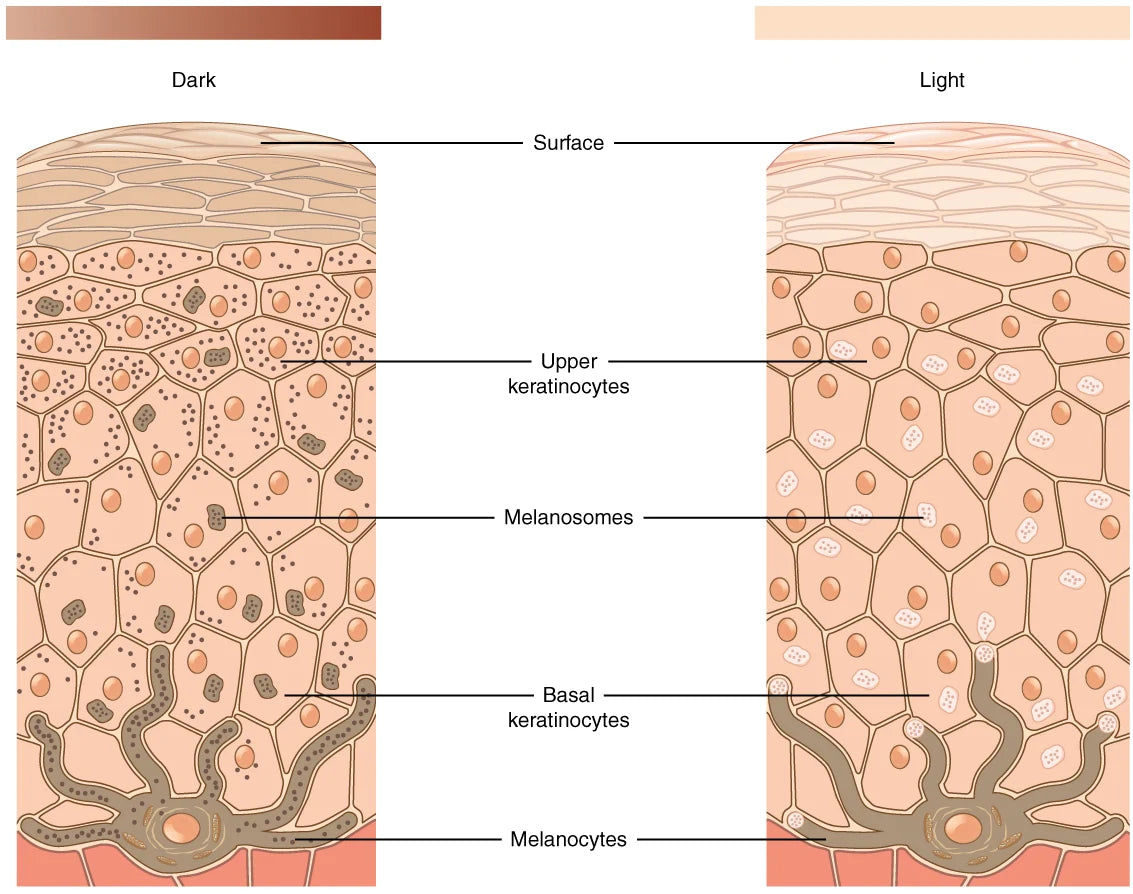
Melanocytes produce pigment and transfer it to surrounding cells. The diagram explains a mechanism; colour alone does not diagnose a dark spot.
Open full-size image ↗Natural colour or a new change?
Melanin contributes to natural skin colour. Pigmentation care addresses unwanted spots or uneven colour; natural skin colour is not a defect. Post-inflammatory marks, melasma and friction-related changes are not necessarily the same condition or treatment target. A rapidly changing, bleeding or unusual lesion should not be assumed to be a cosmetic dark spot.
Why can a spot leave colour behind?
Inflammation can stimulate pigment-producing cells. After the spot settles, extra pigment may remain, creating a common brown post-acne mark. Other marks look red or pink and relate more to blood vessels than the same pigment process. These can overlap, which is why the word marks alone is not enough to choose a treatment.
Dullness and scars are not synonyms for pigmentation
Dullness is an appearance description, not a diagnosis. Dryness can alter how the surface reflects light, and lighting itself changes a photo. A scar changes skin height, whereas a colour mark may be flat. Before buying, specify whether you mean a particular spot's colour, roughness, ongoing acne or a depression. This prevents choosing a product for the wrong task.

Find the stratum corneum at the top and cell renewal below. This is thick skin, such as a palm; its clear lucidum layer is absent from facial skin.
Start with the cause and protection
If acne continues, fading old colour alone will not prevent new marks. Ongoing friction or irritation can also be worsened by stronger exfoliation. Sun protection is central to managing uneven colour, and change takes time. For comparisons, photograph the same area at the same distance and lighting without filters; also record new marks rather than relying on mismatched before-and-after images.
Pigmentation describes a result, not its cause
Residual colour after acne is often post-inflammatory hyperpigmentation. Sun-related spots, melasma and marks after irritation may have different underlying processes. Not every dark area should be treated as the same condition or be expected to respond to one ingredient on one schedule. Look at distribution, appearance, timing, sun exposure and recent products when assessing the history.
Why the plan starts with protection
If acne, irritation and UV exposure continue, new marks may appear even while a brightening serum is used. Protect exposed skin properly, address ongoing triggers when possible and evaluate suitable treatment over a realistic period instead of expecting instant fading. A rapidly changing, bleeding or unusual-looking spot needs medical evaluation rather than cosmetic experimentation.
Your turn
Use what you learned
Replace 'I want glowing skin' with something observable, such as tracking three existing marks and new breakouts. Specify photo conditions.
See the answer and why
Use the same marks, lighting and distance without filters; record dates and routine changes. Do not compare colour across different exposure settings.
Check your understanding
Answer four questions, then review the reason for each answer. You can retry.


