
Final workshop: analyze a SESH fragrance
SESH Academy / Fragrance Academy · Beginner
Apply all 20 lessons to real scent examples without confusing prediction with observation.

Follow the route from the nasal cavity to the olfactory bulb. Smell is perception; it does not independently identify a perfume’s ingredient list.
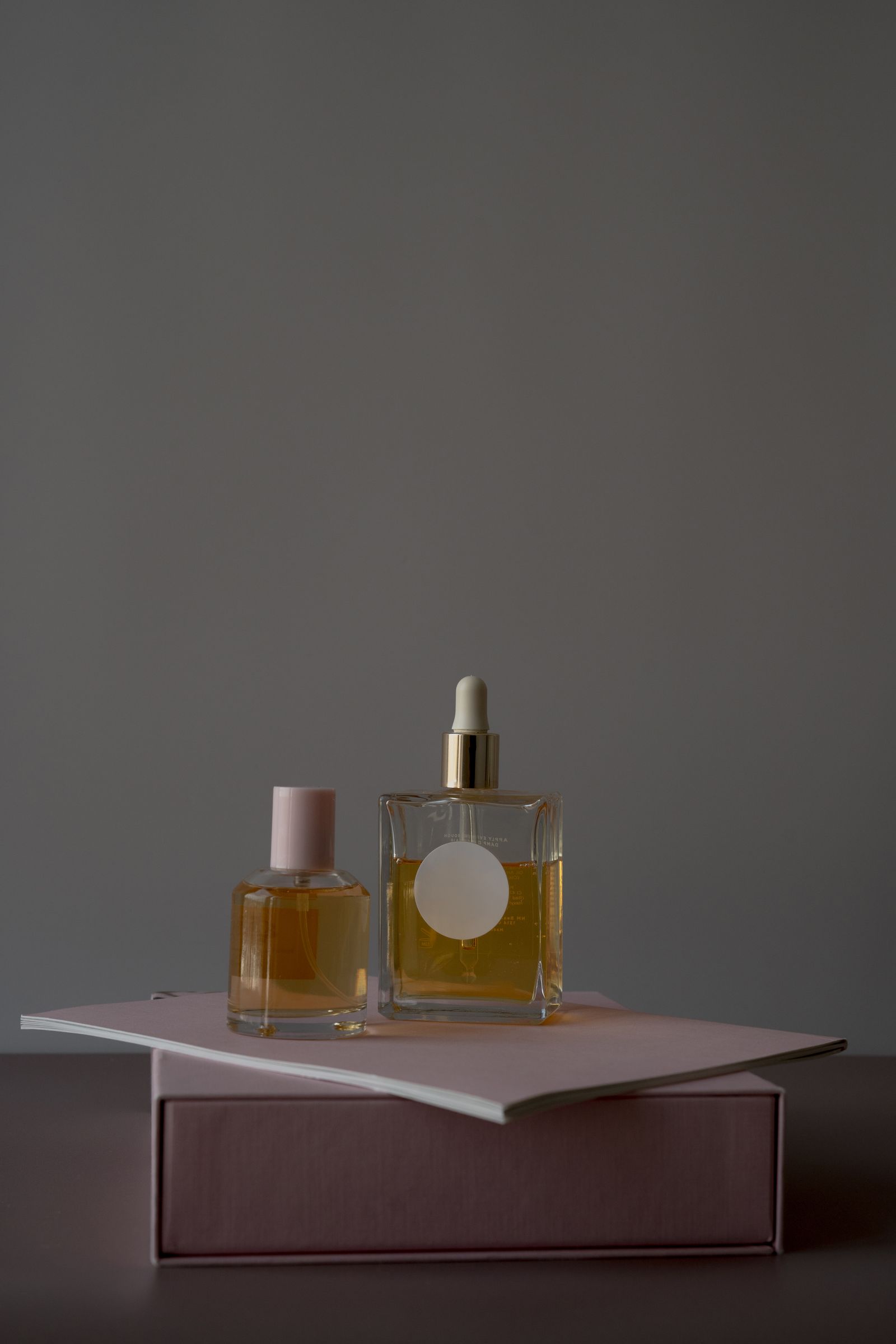
Step 1: begin with the actual product facts
Before analyzing a fragrance, open its current product page and read the exact name, size, listed format and directions. SESH sells various fragrance mists, but the category alone doesn't establish a concentration or wear time. If the brand declares 20% fragrance concentrate, identify it as a brand specification and check whether its weight/volume basis is disclosed. Never fill missing fields with guessed numbers.
Step 2: interpret notes and families
Compare Queen's Garden's fruity-floral profile, Berry Alure's fruit-led positioning and Secrets of Cairo's warm spicy-woody direction. For each, predict top, heart and base only where the published product pyramid supports it; do not invent missing note positions. Identify broad families and expected sweetness, clearly marking untested statements as predictions.
Step 3: sample systematically
If you have samples, start with separate blotters, then use small on-skin tests on intact skin according to product directions. Record the date, dose, setting, opening and later facets. Compare fabric only where the label permits, on a nonvaluable swatch. Personal observations are useful but aren't laboratory verification of ingredients or universally quantified longevity.

Compare vanillin with a vanilla pod: one is a specified chemical and the other a complex botanical material. A vanilla note is a broader sensory description.
Open full-size image ↗Step 4: format, packaging and suitability
Ask what the stated carrier is, whether the atomizer dispenses evenly, and whether packaging compatibility is supported by actual test evidence rather than assumptions about plastic. Consider storage and appropriate dose for offices, classrooms and open-air events. If you can distinguish official facts from personal observations across these areas, you've gained the core beginner skills.
Try it yourself
Create three six-field review cards for Berry Alure, Queen's Garden and Secrets of Cairo.
• Record family and top/heart/base only when published.
• Note format, carrier and concentration if officially specified, otherwise 'not verified'.
• Record sampling experience, application and sensible storage.
Check your reasoning: A good comparison needn't crown a universal winner. 'This fruity one fits my taste, that one is warmer, and I haven't tested the third' is a valid, useful conclusion.

