
Why perfume smells different on different people
SESH Academy / Fragrance Academy · Beginner
Separate skin conditions, sweat, application dose and nose perception, then make a fair comparison.

Skin anatomy: the epidermis sits above the dermis, with follicles and glands at different depths. Location explains a skincare target; it does not prove that a product reaches every layer.
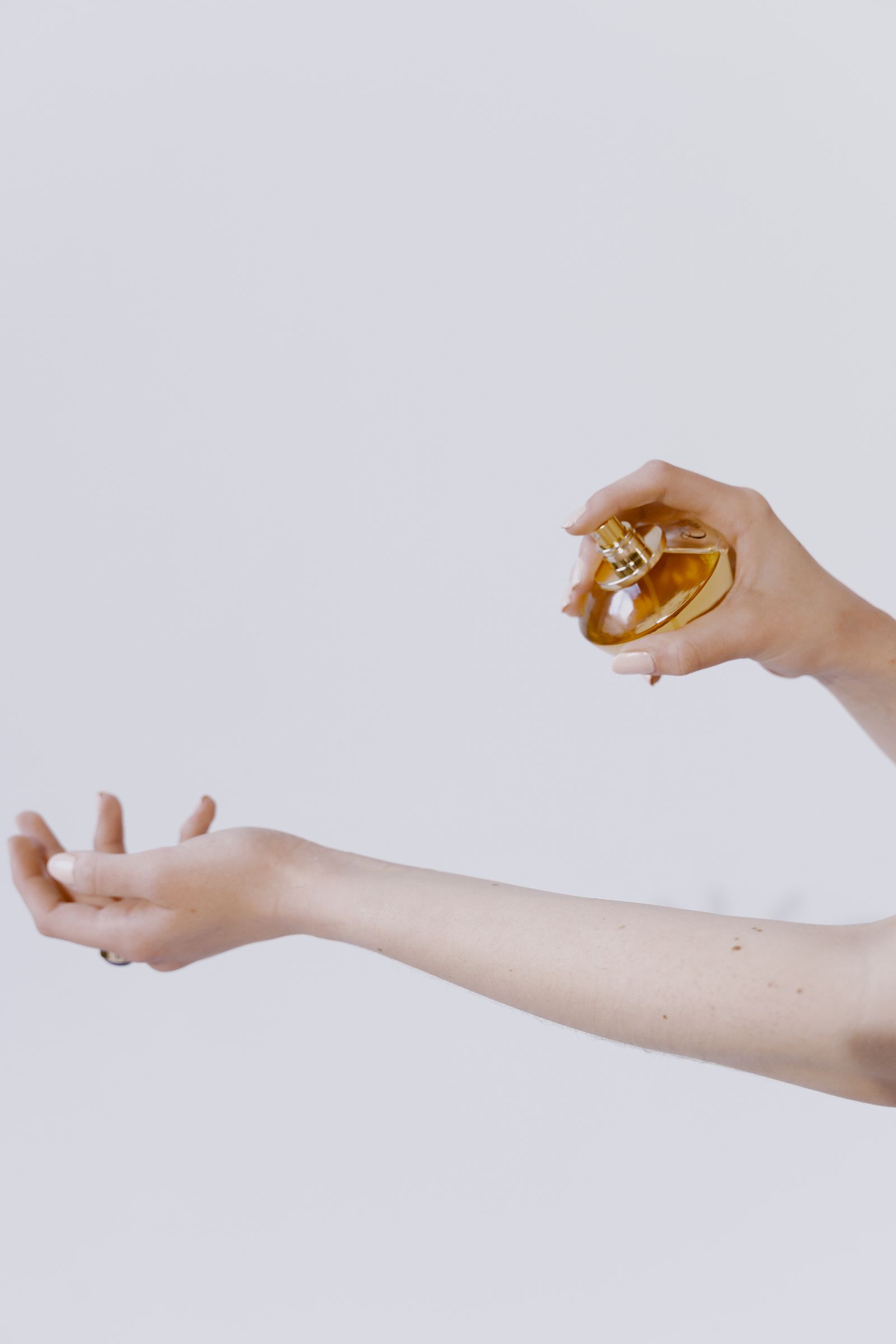
The formula is fixed; wearing conditions vary
Two people using the same bottle are applying the same formula. The formula does not magically become a completely different perfume on contact with a new person. But evaporation, mixing with skin odor or previously applied products, and differences in how each person perceives scent can alter the overall experience. 'Body chemistry' is too vague by itself; ask which conditions changed.
Skin hydration and surface condition
Skin may be dry or hydrated, warmer or cooler, with different sweat conditions from person to person. A scented lotion can contribute a competing odor, making a comparison unreliable. Some wearers report more noticeable persistence after moisturizing, but this isn't a universal rule or a guaranteed wear time. Keep dose and application area consistent when testing.
Your own nose is part of the experiment
You may focus on vanilla while a friend notices rose because olfactory sensitivity, learning and adaptation differ. If you stop noticing your perfume after a while, it hasn't necessarily disappeared for everyone. Someone describing a musky effect on another person's skin might be perceiving a blend with another product or simply focusing on a different facet.

Follow the route from the nasal cavity to the olfactory bulb. Smell is perception; it does not independently identify a perfume’s ingredient list.
A small but fair comparison
To explore differences between two wearers, use the same bottle, similar doses, comparable intact-skin locations, roughly the same environment and no competing scented lotion. Record descriptions independently before discussing them. Compare again later, recognizing this is a personal observation rather than a controlled laboratory result. Stop if irritation occurs.
Try it yourself
Why might Queen's Garden seem fruitier to you and more floral to a friend? Distinguish scent behavior from perception.
• Use the same perfume in comparable appropriate locations.
• Write three descriptors independently.
• Revisit after about twenty minutes and compare.
Check your reasoning: Different descriptions don't prove the perfume changed in its bottle. Wear conditions, perception and expectations are all possible contributors.

