
Lesson 2 of 3 in this stage
Cleanser formulation: beyond foam and pH
Explain surfactants and compare cleansers using formulation and use conditions, not one number.
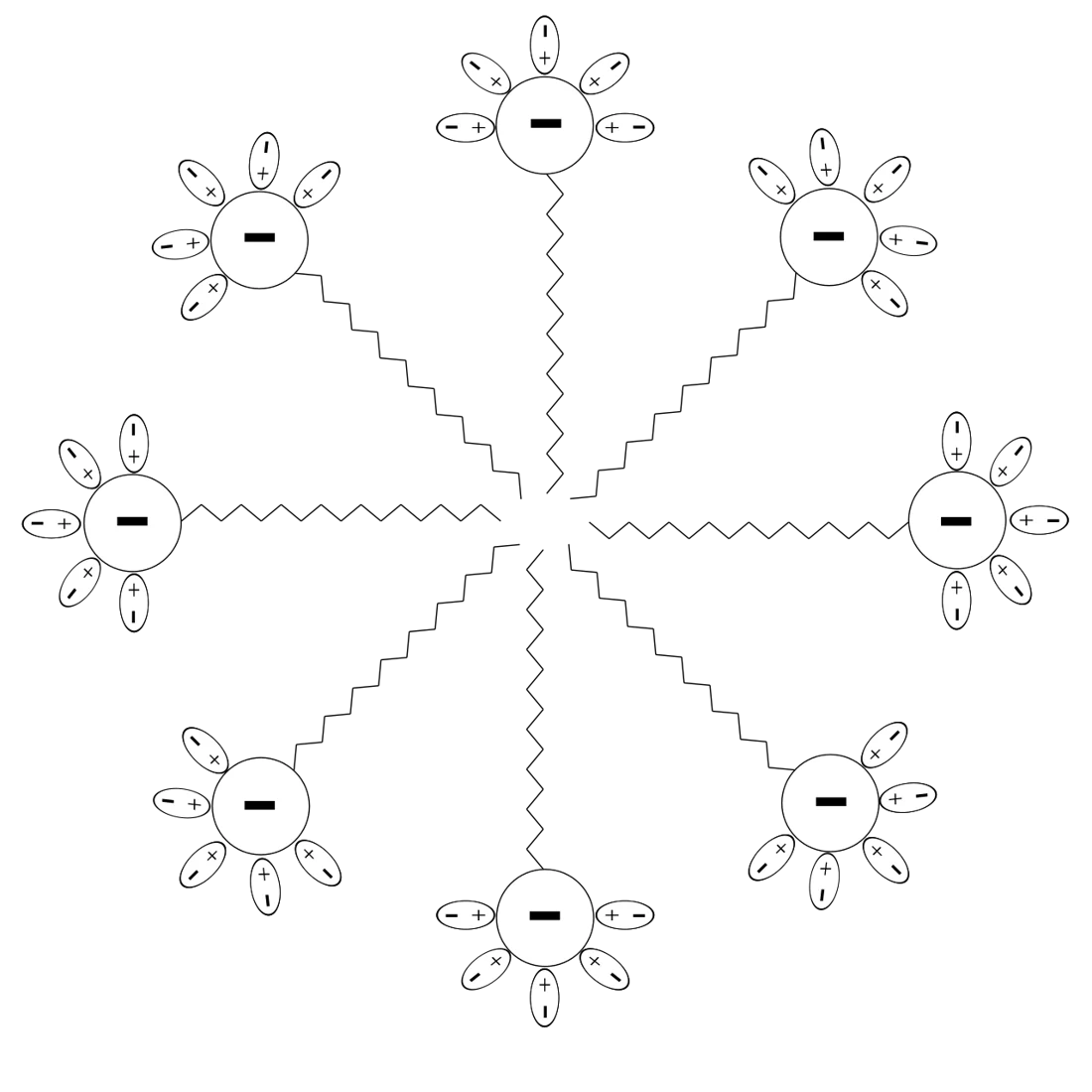
Water-loving heads face outward and oil-loving tails inward. This models surfactant assembly in water; cleanser performance depends on the whole formula.
Open full-size image ↗How does oil leave with rinse water?
Water alone does not readily mix with oils. A surfactant has a water-loving part and an oil-preferring part. In a formula, these molecules can form groups called micelles: oil-preferring parts face inward and water-loving parts outward. This helps oily material leave with rinse water. The diagram explains the principle, not a universal micelle size or identical cleanser performance.
Heads face outward toward water; tails point inward away from it. This depicts surfactant organization in a micelle, not a skin cross-section.
Kifo · Public domain · Licence · Open the image to enlargeThe blend matters more than one ingredient name
Surfactants differ in charge and structure, and formulas often combine types to adjust cleansing, foam and feel. One listed ingredient alone cannot establish the irritation potential of the finished cleanser. Concentration, the blend, contact time and rinsing matter. Even a tolerable cleanser can become uncomfortable with repeated washing, hot water and prolonged rubbing.

Oil droplets dispersed in water: a real emulsion example, not a photograph of a SESH formula or proof of cream efficacy.
Open full-size image ↗pH describes a property, not a gentleness certificate
pH describes acidity in an aqueous environment. Traditional soap is often alkaline, whereas other cleansing systems can be adjusted differently. Two cleansers at the same pH can still differ in surfactants, fragrance, feel and tolerability. Foam consists of stabilized air bubbles; it is not a meter of removed dirt.
What makes a useful comparison?
First define the load: everyday oil or water-resistant makeup? Compare removal and after-wash comfort using similar amounts, contact times and rinsing. A cleanser that removes makeup but persistently stings is unsuitable for you; a comfortable one that leaves the required load behind needs a different approach. Do not prolong contact with an exfoliating cleanser to obtain an unlabelled benefit.
Critical micelle concentration is not a product-quality score
Surfactants have water-affinitive and oil-affinitive regions, and some form micelles above characteristic concentrations under given conditions. But a finished cleanser depends on mixed surfactants, solvents, supportive ingredients and rinse behavior. One surfactant name or one pH value cannot establish that the entire formula is “gentle” or “harsh.”
Why cleanser evaluation requires multiple measures
Laboratory tests can assess residue removal or tolerance, but real use also depends on rubbing time, amount, frequency and the starting skin condition. A highly foaming cleanser that is effective and well tolerated should not be rejected merely because of its foam. A skin-like pH does not negate severe stinging or irritation if it occurs.
Your turn
Use what you learned
Name two cleanser test criteria other than foam volume and pH.
See the answer and why
Removal of the intended load and after-wash comfort without persistent tightness or stinging. Standardize use to interpret differences.
Check your understanding
Answer four questions, then review the reason for each answer. You can retry.


