
How to deconstruct a complex fragrance | SESH Academy
SESH · Intermediate Fragrance Academy
Use a top-down framework to describe a complex blend without pretending to identify every ingredient.

Follow the route from the nasal cavity to the olfactory bulb. Smell is perception; it does not independently identify a perfume’s ingredient list.
Go from whole to parts
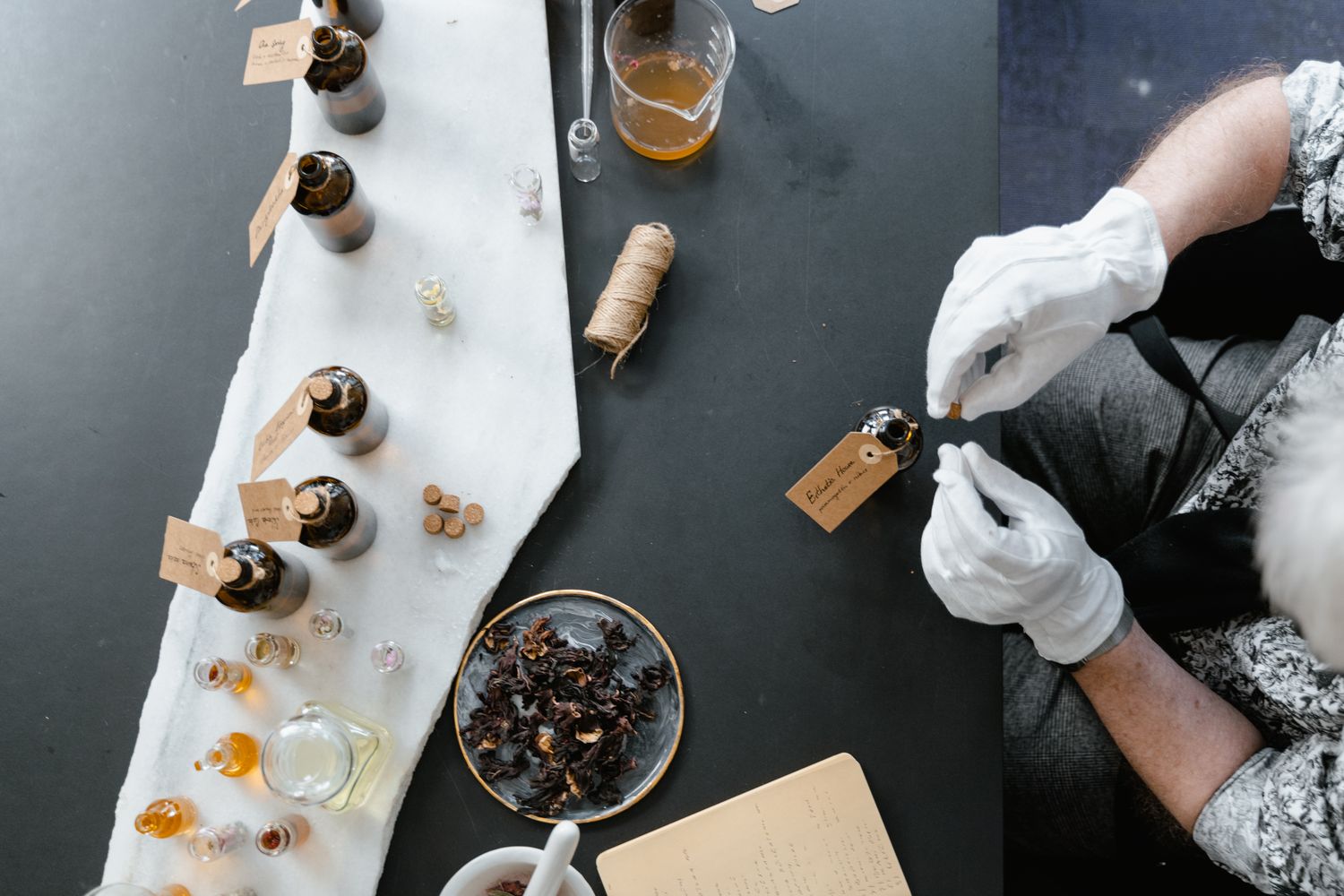
Begin with one useful sentence: 'warm fruity scent with a woody background.' Then separate the dominant character, modifiers and supporting backdrop. A fragrance mixture is often perceived as a unified odor object. Starting by guessing ten ingredients is less reliable than describing the overall structure.
Use perceptual axes
Use independent perceptual axes: fruity-to-floral, fresh-to-warm, dry-to-creamy, and faint-to-intense. These aren't strict scientific opposites, nor do scents need to occupy only one end. A fragrance can feel fruity and floral together, and evolve from bright to warm. Scales help compare observations consistently.
Break analysis into checkpoints
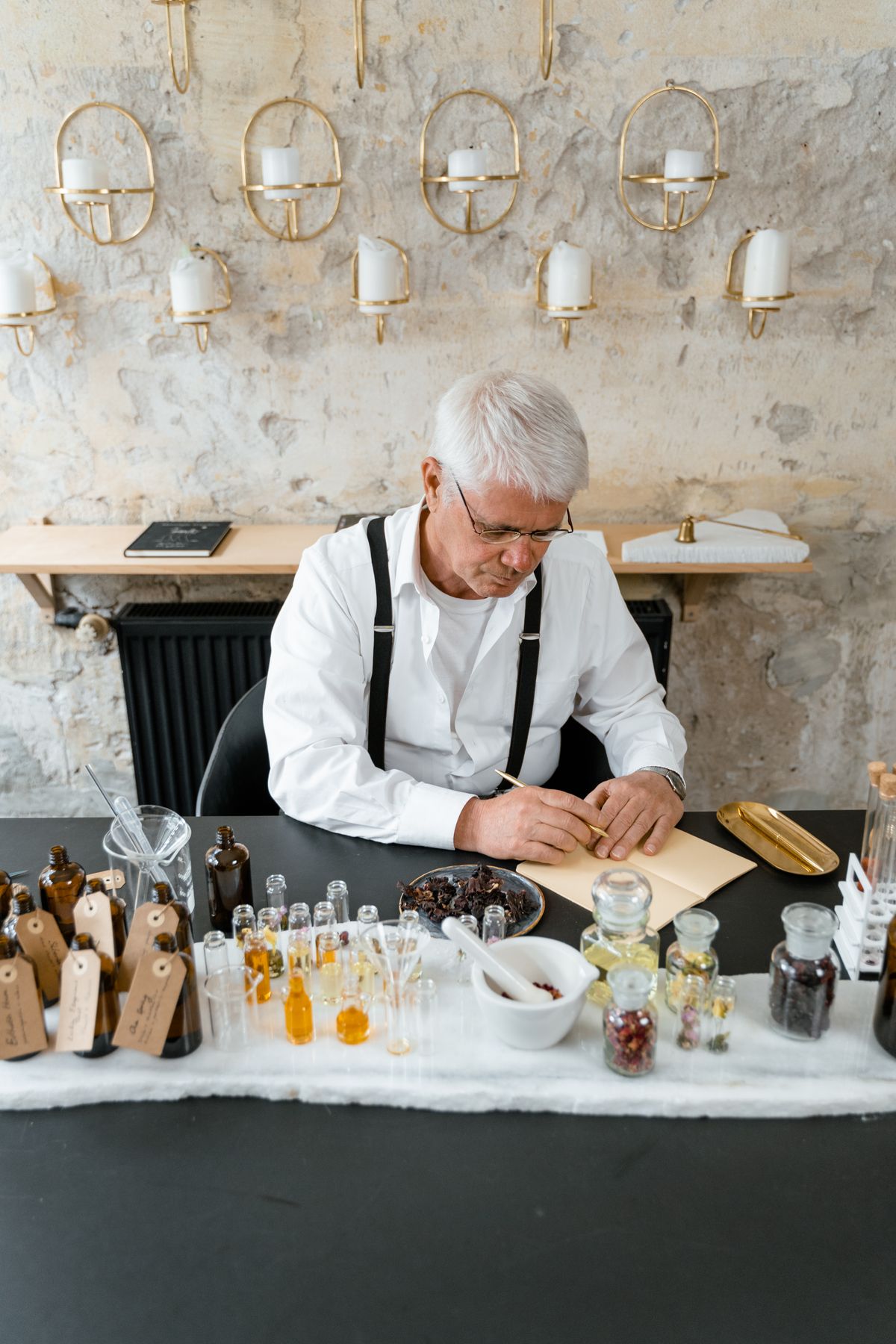
Write a snapshot at 5 minutes, 30 minutes and 2 hours. If citrus fades and wood becomes clearer, report the prominence shift without claiming that every citrus molecule has disappeared. The purpose of time checkpoints is a more faithful perceptual record, not a perfect chemical timeline.

Linalool contains an OH alcohol group. One functional group is insufficient to predict every molecule’s odour or the performance of a mixture.
Open full-size image ↗Draw a fragrance character map
Put 'overall character' at the centre of a map, then add branches for lead, support, background and evolution. Provide evidence from your notes for each branch. If 'sweet' appears everywhere, refine it: juicy fruit, creamy vanilla or caramel-like warmth? This refinement transforms a vague impression into a comparable sensory profile.
Worked example: fruity-woody complexity
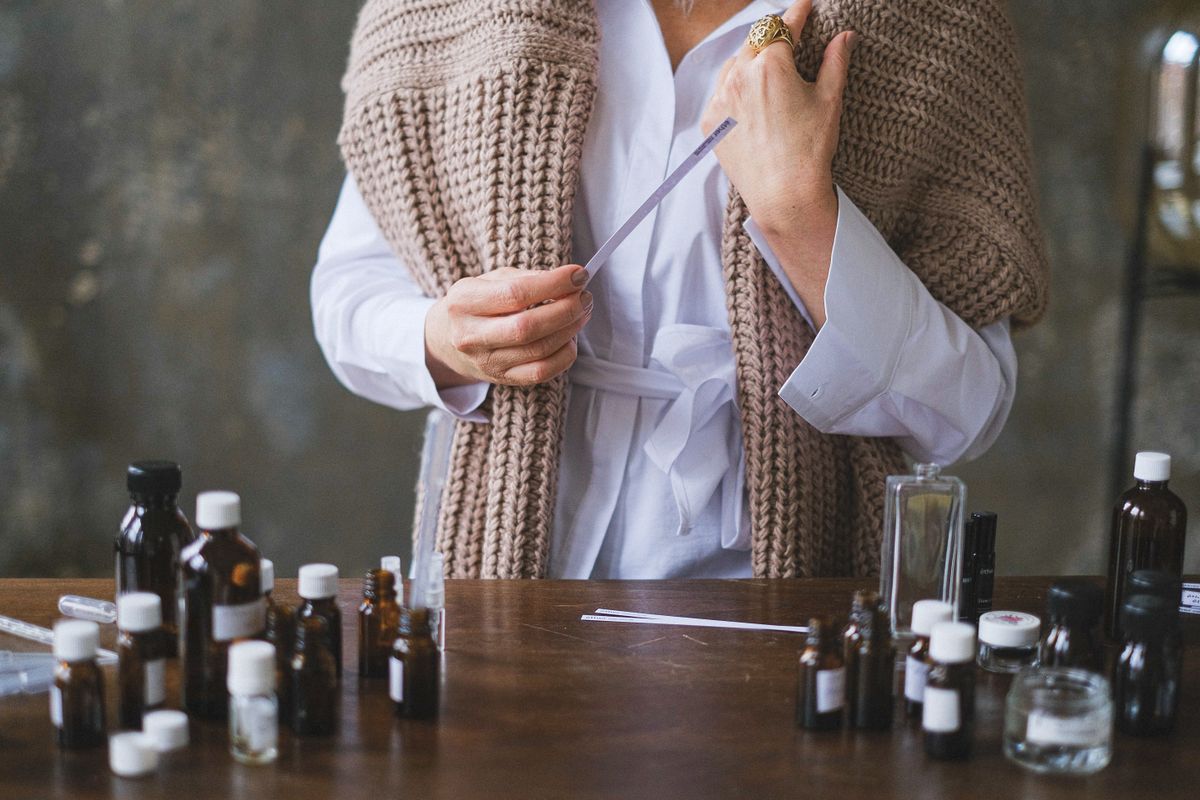
To deconstruct a fruity-woody fragrance, ask whether the fruit is juicy or dessert-like, whether the wood is dry or creamy, whether a third facet such as powder or spice modifies the blend, and which aspect remains after an hour. Put the overall character in the center of a map and connect lead, support, background and a timeline. If fruit declines and wood becomes clearer, report a change in perceived prominence, not proof of a new chemical composition.
Complexity is not an inventory of notes
Mixtures can create an emergent impression rather than a neat inventory of separately identifiable materials. Masking means one constituent may be present without standing out. A well-documented 'green floral' descriptor is more defensible than five confidently guessed raw-material names. Evaluate how the overall character evolves over time.
Practical exercise
Create a character map for a SESH perfume you have access to. Write a one-sentence profile, four descriptive facets and a time-based map. Check whether each view adds new information.
Comparison guide
From general to specific
- One-line overall impression
- Family, texture and intensity
- Lead, modifier and background
A simplified time map
- 5 min: bright opening
- 30 min: core character
- 120 min: remaining character
Practice with SESH fragrances
Optional references for practice, without unverified ingredient claims or rankings.

