
Lesson 1 of 4 in this stage
The skin barrier: how skin holds on to water
Explain the outer barrier and why harsh cleansing or excessive exfoliation can cause tightness and stinging.

Find the stratum corneum at the top and cell renewal below. This is thick skin, such as a palm; its clear lucidum layer is absent from facial skin.
Skin is more than a covering
Skin has layers. The epidermis is the outer layer; beneath it, the dermis contains vessels, nerves and glands. In skincare, the barrier usually means the outer epidermis, especially the stratum corneum. Flattened cells and surrounding lipids help limit water loss and exposure to irritants. This is a regulating system, not a wall that blocks everything.
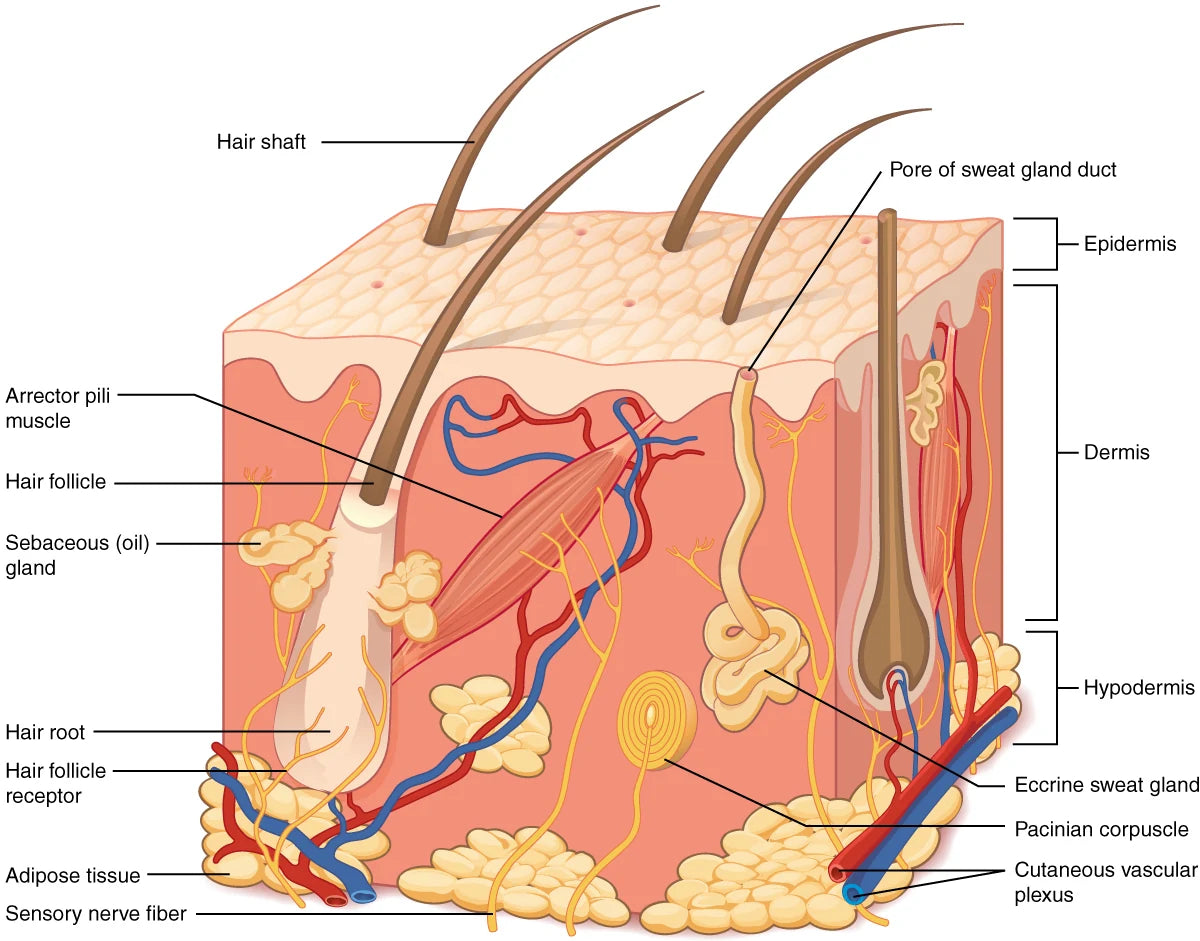
Find the outer epidermis and the dermis beneath it. This locates the surface barrier within the skin.
OpenStax College: J. Gordon Betts, Peter Desaix, Eddie Johnson · CC BY 3.0 · Licence · Open the image to enlargeWhy can shiny skin still feel tight?
The oil you see on your face comes from sebaceous glands. Water within the outer skin is a different thing. Shine can therefore coexist with low hydration or irritation. Tightness alone is not a diagnosis: a cleanser, weather or a skin condition can contribute. Note when it began and what changed before treating every tight feeling as a dry skin type.
Skin anatomy: the epidermis sits above the dermis, with follicles and glands at different depths. Location explains a skincare target; it does not prove that a product reaches every layer.
Care that supports the barrier
Cleansing removes the day's residue, but clean skin need not feel tight. Moisturizer helps retain water and improves surface feel. If a new exfoliant causes stinging or peeling, stop the suspected product, pause optional irritating steps and use a simple routine you already tolerate. Do not scrub off flakes to remove a supposedly damaged layer. Persistent pain, rash, swelling or painful cracks need medical assessment rather than another serum.
Understand the barrier as a water-management system
The stratum corneum contains cohesive cells surrounded by organized lipids, including ceramides, cholesterol and fatty acids. This structure limits water loss and reduces exposure to certain irritants. Natural moisturizing factors inside cells attract and hold water, which is different from the lipids that help slow its escape. That is why a useful moisturizer may combine water-binding ingredients, surface-softening ingredients and components that reduce water loss. A watery serum alone is not a complete definition of barrier care.
Separate an observation from a diagnosis
Tightness immediately after cleansing tells you when a symptom appeared; it does not diagnose your permanent skin type. Stinging from a previously comfortable product may suggest irritation, but it does not prove a particular barrier disorder. Check recent changes such as stronger cleansers, repeated exfoliation and hot water. Persistent rash, painful cracks or worsening symptoms deserve medical assessment.
A practical decision sequence
- Pause new optional products that coincide with stinging or peeling.
- Return to a gentle cleanser, a short routine and a moisturizer you previously tolerated.
- Once comfortable, reintroduce optional products gradually, one at a time, so a recurrence is easier to interpret.
If symptoms persist or intensify, seek a dermatologist rather than continuing product experiments.
Your turn
Use what you learned
Write Mariam's routine before and after the additions. Identify the new steps and choose what to pause. What will you monitor?
See the answer and why
Pause the irritating scrub and exfoliant; return to tolerated gentle cleansing and moisturizing. Monitor stinging, tightness and peeling. Persistent symptoms need assessment; improvement does not mean every product in those categories is unsuitable.
Check your understanding
Answer four questions, then review the reason for each answer. You can retry.
Connect the concept to actual ingredients
Differentiate a water-binding humectant such as glycerin, a barrier lipid such as ceramides, and ingredients that limit surface water loss. The finished formula matters more than an isolated ingredient name.
SESH example
Nighty Night Cream contains glycerin and niacinamide alongside other moisturising ingredients. Always assess the complete INCI list rather than a single highlighted active.
Related SESH references: Nighty Night Cream · Niacinamide · Ceramide NP


